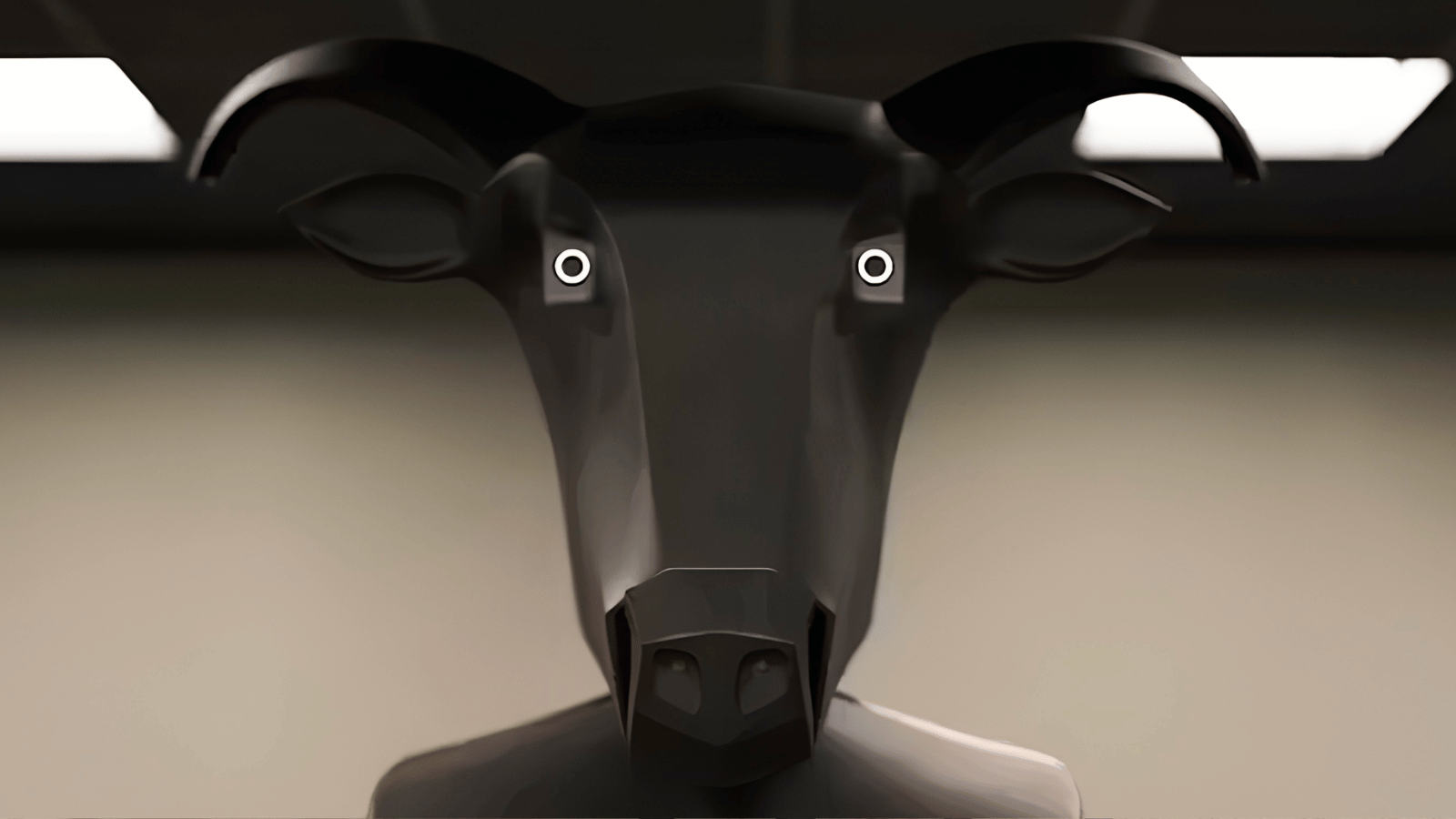
Satyress has showcased Threehalves, a “superhumanoid” general-purpose robot designed for hazardous working environments. However, Satyress decided to go for a rather unusual design compared to conventional humanoid robots. The Threehalves uses a centaur-style design, combining a humanoid torso and arms with a four-legged lower body. It is taller than most humans, standing at 7 feet (2.1 meters). For some reason, Satyress decided to give its new robot a distinctive goat-like head with horns.
-
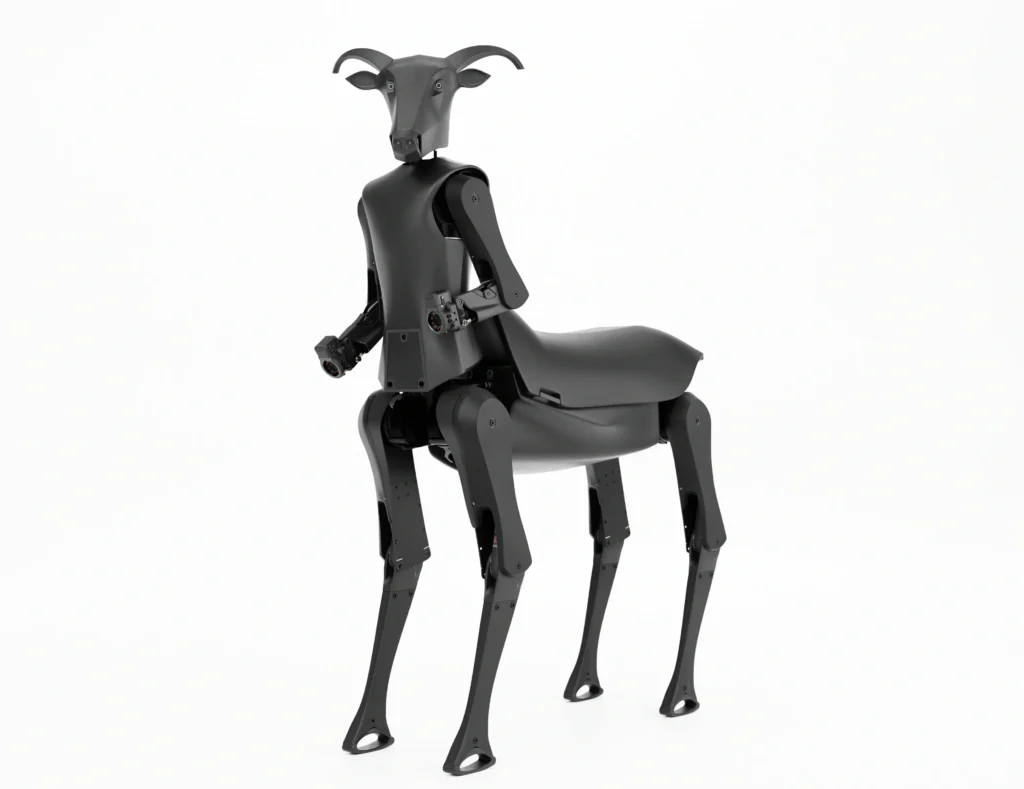
The Satyress Threehalves features a four-legged, centaur-style design. (Via Satyress)
The Threehalves robot is not fully autonomous. It requires a human operator to control the robot remotely, allowing skilled workers to perform tasks in environments involving extreme temperatures, darkness, dangerous terrain, or other conditions that could cause injury or death.
-
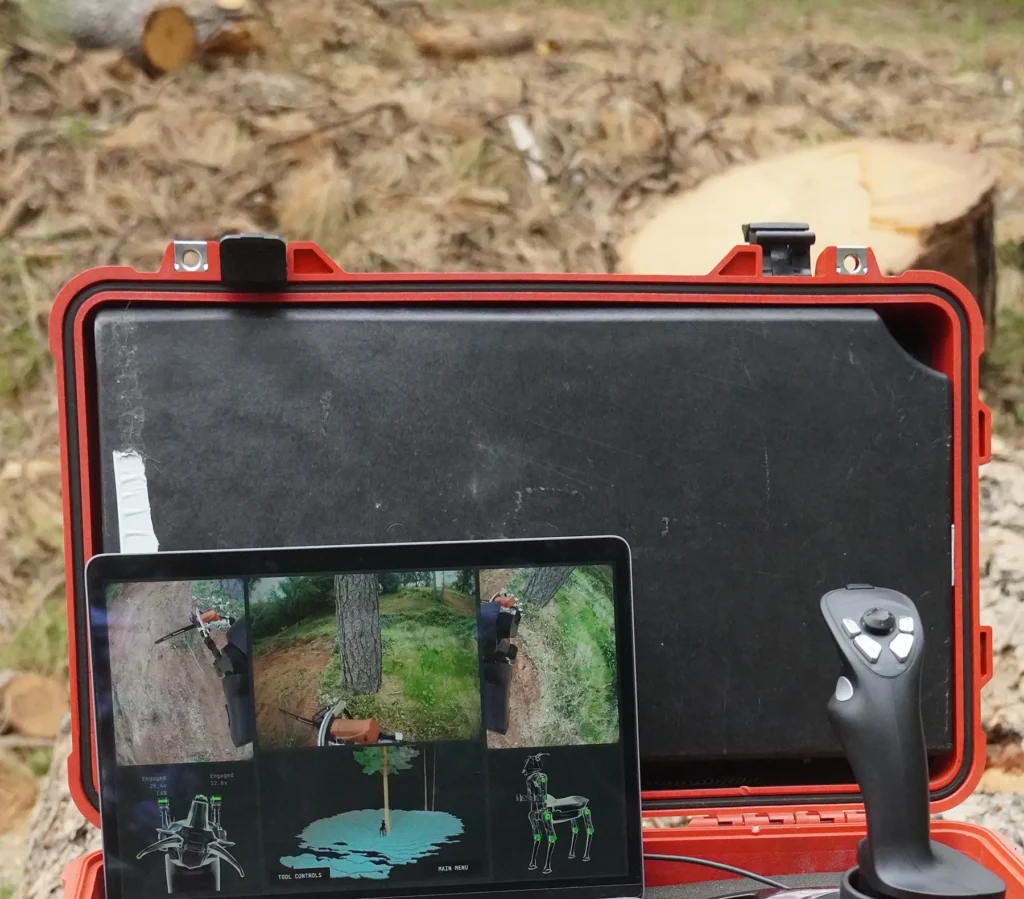
The remote-control setup used to operate Threehalves. (Via Satyress)
Built to Use Different Tools
Threehalves does not have conventional robotic hands. Instead, each arm features a quick-connect wrist interface that allows different tools to be attached directly.
-
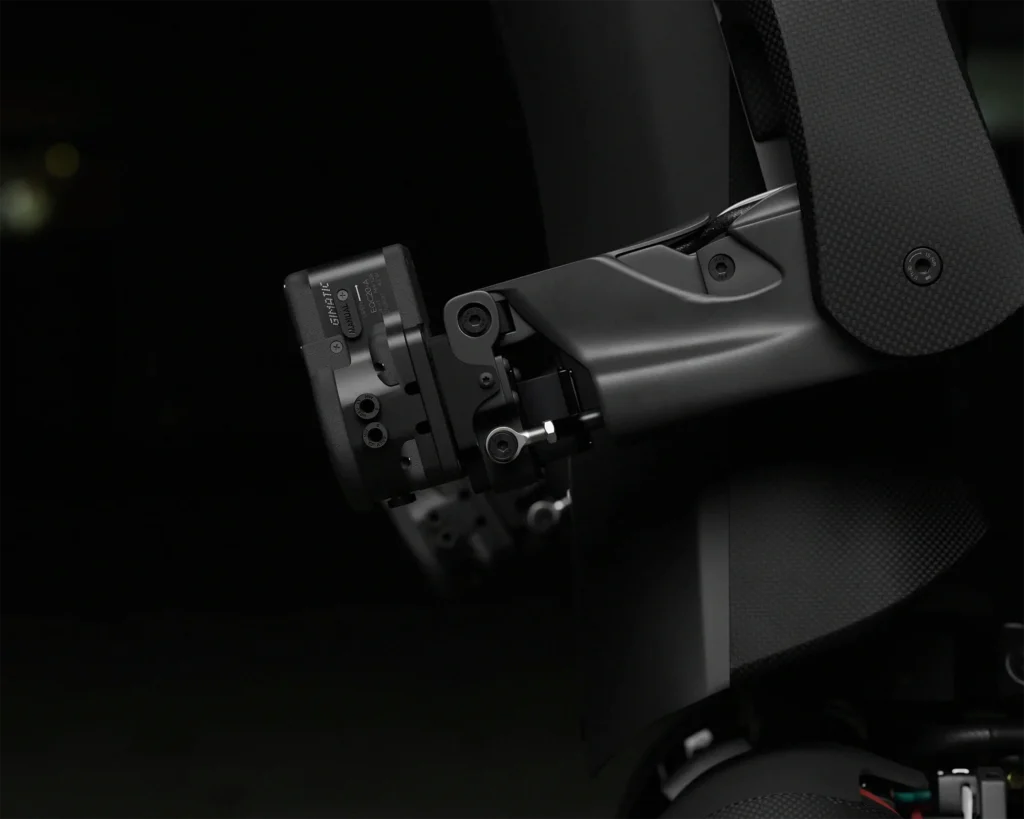
Threehalves uses a tool interface instead of conventional robotic hands. (Via Satyress)
Satyress has demonstrated the robot with equipment including a chainsaw and an impact tool. Attachments can receive 12V, 18V, or 48V power, as well as compressed air, directly from the robot.
The four-legged chassis is designed to provide greater stability than a bipedal configuration. Its joints incorporate friction brakes, which can hold the robot in position without continuously consuming power. The limbs, torso, and head are also modular and can be replaced and recalibrated within minutes if damaged.
-
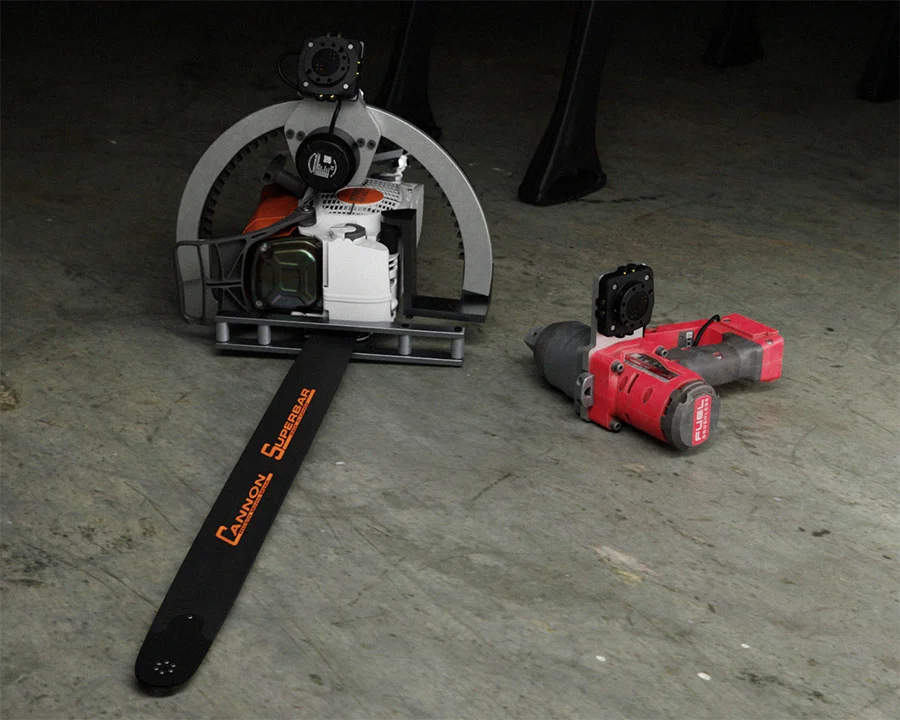
Tools designed to connect to the Threehalves robot. (Via Satyress)
Physical Safety Systems
Considering the robot’s size and ability to operate heavy tools, Satyress has also built several physical failsafes into Threehalves.
If the system loses air pressure, fail-on air brakes and pin locks are designed to immobilize the robot. Shared air reservoirs located within its chest and body can also be punctured using a projectile or sharp object, causing the robot to stop in place.
Its large dimensions provide another physical limitation. According to Satyress, Threehalves is significantly slowed when trying to pass through a standard 32 x 80-inch US doorway and cannot turn around in a 42-inch-wide hallway. Larger horns can even be installed to prevent the robot from passing through pedestrian doors altogether.
Despite its size, two Threehalves robots can fit side-by-side in a pickup bed measuring at least 5 feet 6 inches long when crouched. Satyress has not announced pricing or commercial availability for the robot.
Here is the summary of the specifications:
- Height: 7 feet (around 2.1 meters)
- Design: Humanoid upper body with four-legged centaur-style chassis
- Control: Teleoperated
- Hands: None
- Tool interface: Quick-connect wrist system
- Tool power: 12V, 18V, and 48V
- Pneumatic support: Compressed air can be supplied to attachments
- Joints: Friction-braked quadruped joints
- Construction: Modular limbs, torso, and head
- Service hardware: Three common fastener types across serviceable assemblies
- Safety systems: Fail-on air brakes and mechanical pin locks